06.01.2011

Tipps: Neue Perspectives on Terrorism und: Screenwriting-Podcast - Update! (07. Jan.)

Selbst wenn Sie es nicht mehr hören mögen: Terrorismus & Film wünscht Ihnen auch noch ein frohes neues Jahr 2011.

Zu dessen Auftakt hier einige kleine Lese-, vor allem aber Hörtipps:

Die Ausgabe Nr. 6 (Jg. 4) des Journals Perspectives on Terrorism in frisch herausgekommen – nicht umsonst, aber kostenlos. Die Artikel gibt es online einzeln HIER zu lesen.

(Achtung!! UPDATE: Offenbar gibt es kein Komplett-PDF von Perspectives on Terrorism auf der Website des Journals selbst mehr. Zu bekommen ist es aber über den Dokumentendiest "Scribd". Mehr dazu direkt auf der Seite von Perspectives on Terrorism)


Der Inhalt von Heft 6:

Justice or Peace? The Hariri Assassination and the Special Tribunal for Lebanon
von Maria-Rita Kassis

Online De-Radicalization? Countering Violent Extremist Narratives: Message, Messenger and Media Strategy
von Omar Ashour

The Lord's Resistance Army: an African Terrorist Group?
von Emma Leonard

A Critical View of Critical Terrorism Studies
von James M. Lutz

Als Buchrezension:
Cutting the Fuse: The Explosion of Global Suicide Terrorism and How to Stop It
Robert A. Pape & James K. Feldman

Sowie:
Selected Literature on Terrorism and Organized Crime
zusammengestellt von Eric Price


**************************

Wenn Sie jedoch Ihre Augen lieber schonen wollen oder für die Autofahrt noch etwas zum Hören suchen, seien in puncto Terrorismusfilm einige Podcasts von Jeff Goldsmith empfohlen. Goldsmith ist Senior Editor des Creatvie Screenwriting Magazins und interviewt regelmäßig Regisseure und/oder Drehbuchautoren zu ihrem (neuesten) Film. Ganz spannende und teilweise sehr ausführliche dramaturgische Analysen und Hinter-die-Kulissen-Einblicke z.B. in die Stoffentwicklung oder die Divergenz zwischen ursprünglicher Idee und fertiger Erzählung bieten für unser Thema Terrorismus bietet z.B.


Regisseur und Drehbuchautor Chris Morris, der Macher von FOUR LIONS, der von der Realität schusseliger Terroristen zu berichten weiß. (Link zur MP3-Datei mit dem Q&A HIER – zum direkten Runterladen den entsprechenden Befehl im Rechtsklick-Menü auswählen)


Regisseur und Drehbuchautor von TRAITOR Jeffrey Nachmanoff, der erzählt, wie er statt Terry George (Drehbuchautor von Jim Sheridans IN THE NAME OF THE FATHER und THE BOXER sowie Director von u.a. SOME MOTHER’S SON und HOTEL RWANDA) auf dem Regiestuhl gelandet ist – vor allem aber, dass TRAITOR zunächst als üblicher Actionhelden-Story geplant war, bis man auf die Idee kam, dass der „blonde blauäuige“ Hero als Untercover-Agent in einem Radikalislamisten-Netzwerk (heute nicht mehr) funktionieren würde. Diese Einsicht hat sich insofern als Segen herausgestellt, da aus TRAITOR ein beachtlicher, nicht perfekter, freilich gerade in seinen kleinen Brüchen ein sehr bemerkenswerter Film geworden ist. (Das Interview finden Sie HIER.)


Aaron Sorkin, gerade für sein Script für David Finchers Facebook-Film SOCIAL NETWORK zu Recht gefeiert, gibt HIER Auskunft über seinen Werdegang – und seine Arbeit an Mike Nichols brillanten bissigen CHARLIE WILSON’S WAR über den Politiker, der die Mujaheddin in Afghanistan im Krieg gegen die Russen als Stellvertreter und unterstützungswürdige Freiheitskämpfer „entdeckte“. Eine letzte Szene, so verrät Sorkin im Interview, sollte den Bogen schlagen zum 11. September …
(Download HIER)


THE KINDGOM ist ein Actionthriller über eine FBI-Team, das wegen eines Anschlags in Saudi-Arabien ermittelt (dt. OPERATION: KINGDOM). Ganz interessant, dass der Film das Öl-Reich entdeckt und dass und wie und warum er letztlich doch in die Waffengewaltlösung des Genres verfällt … Im Gespräch enthüllt der Drehbuchautor und studierter Politologe Matthew Michael Carnahan (STATE OF PLAY, LIONS FOR LAMBS) unter anderem und vor allem über die Zusammenarbeit bei der Stoffentwicklung mit u.a. echten FBI-Beamten und deren Arbeit. Eine kleine Zensur ist auch drin – um potentiellen Terroristen, die das Podcast HIER hören können, keinen Tipp zu geben …
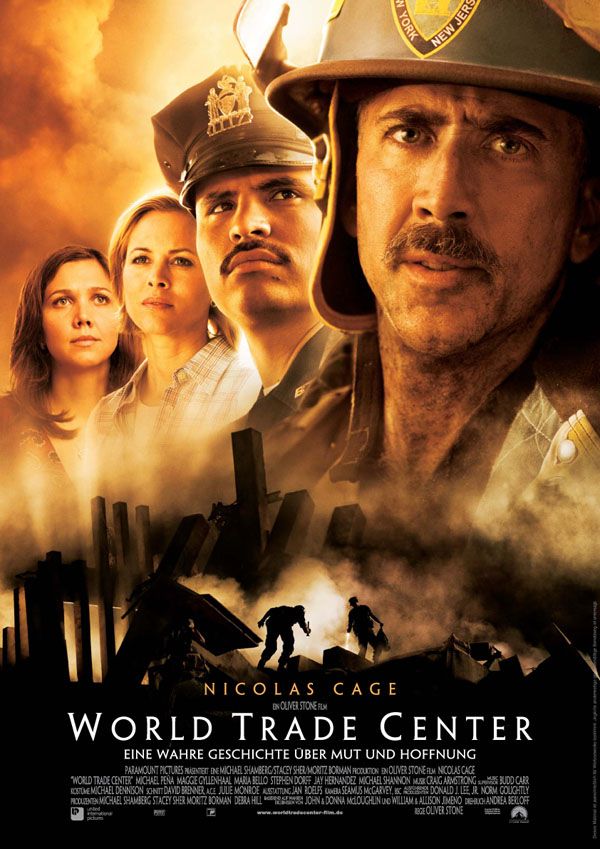


Zu ihrer Drehbucharbeit für Oliver Stone und seinen Film WORLD TRADE CENTER steht Andrea Berloff HIER Frage und Antwort. Unter anderem darauf, wie das Verhältnis mit den realen Überlebenden war – und das der Film bewusst unpolitisch gehalten wurde, was damals für einige Kritik gesorgt hatte…

Viel Spaß!

13.12.2010

In eigener Sache

Aufgrund anderer Verpflichtung – vor allem aufgrund der Endarbeit an meiner Dissertation – war es mir nicht vergönnt, neue Texte für "Terrorismus & Film" zu verfassen und einzustellen. Auch in den kommenden Wochen wird das wohl der Fall sein.

Trotzdem möchte ich mich ganz herzlich bei Ihnen, den Lesern, für Ihr Interesse, die Aufmerksamkeit und die vielen Kommentare, Anregungen und Nachfragen bedanken. Die Besucherzahlen dieser Seite hat sich dank Ihnen gegenüber dem letzten Jahr nahezu versechsfacht!

Ich wünsche Ihnen ein frohes Weihnachtsfest und eine großartiges neues Jahr 2011.


Bernd Zywietz

CfP: Root Causes of Terrorism

Hier eine "Papieraufruf" für eine Konferenz im niederländischen Leiden:


__________________________________________________

Call for Papers

"The Root Causes of Terrorism: A Religious Studies Perspective"
Interdisciplinary Conference,
Institute for Religious Studies, Leiden University
Leiden (Netherlands)
18-19 May 2011

__________________________________________________


Nine years after the event of the September 11th and the global war on terror, bombs are still blasted and innocent people are being killed under the banner of terrorism. Most of these sinisterly threatening events are motivated by religious claims, or are taken place in religiously affected places. Is religion the main cause of terrorism, or does terrorism still arise because of leaders who brainwash and coach future terrorists so that they kill under the banner of religion? Religious imagination seems to hold here an influential power in the creation of ‘delusion’ to orient the ‘bigot’ believers toward the fulfilling of their religious duty against those who are religious in a different way or not religious at all. Religion, in this sense, is tightly allied with political aspirations as it can be seen in most of the current instances.

In spite of sacred pretexts justifying acts of killing, more ‘enlightened’ religious leaders and religious minded people believe and argue that religion is a source of peace and mercy. For them, the sacred texts must be read from a ‘humanist’ perspective because the whole religion is ultimately, so they claim, about human beings who are all equal and created by the same God. This is the attitude of many religious people today, i.e. that God is merciful and compassionate, and the religious tradition thus praised would never allow religious hatred, intolerance, and resentment. Nor do scriptures provide any rationale, so they say, for one-sided and serf-serving interpretations or interpretations that promote aggression against others. If religion falls short, they continue, of mercy, compassion, and peace, it falls into ideological dogma and stoned-headedness. Therefore, those interpretations that justify aggression and acts of killing are the shallow and purposeful readings of the religious texts aiming at political intentions, so more benevolent advocates of religions might plead.

Whatever reading of religious traditions one might advocate, it cannot be denied that in practice, religion and ‘violence’ often are closely associated. The central question of this conference is what a religious studies perspective (rather than that of a religious advocate or representative) can contribute to the deep links between
religion and terrorism.

Scholars of philosophy, theology, social and political sciences, and other relevant disciplines, are invited to participate. Pending on financial approval a selection of the conference contributions will be published in a volume with the working title: The Root Causes of Terrorism: A Religious Studies Perspective. Otherwise the accepted
papers will be published on the conference website as conference proceedings.

Keynote speakers:

Prof. Nitzan Leibovic
Lehigh University, Bethlehem, Pennsylvania
Apter Chair for Holocaust and Ethical Values

Dr. Wim Hofstee
Leiden University, Institute for Religious Studies
Comparative Religion & Anthropology of Religion

Dr. Christoph Baumgartner
Utrecht University, Department of Religious Studies and Theology
Ethics

Prof. Bassam Tibi
Universität Goettingen

Conference Themes (Tentatively suggested);
Conference topics of interest include, but are not limited to the
following parts:

Part One: Religions and non-violence (ahimsa etc.)
All major religions have tenacious traditions of non-violence, however distorted these might have become through religious practices throughout history. How do these non-violent traditions relate to the violence justified by other adherents of the same religions?

Part Two: Violence and Liminal Experiences in Religion
Religions usually demarcate crucial (‘liminal’) events in the life of their adherents. So-called ‘primitiveadulthood enhancing ‘violent’ activities, perpetrated both by the initiators and those to be initiated in tribal life. Perhaps religious customs such as
circumcision and baptism are domesticated and mitigated remnants of these violent activities. Is liminality in religion a possible root of violent behaviour?

Part Three: Violence and Sacrifice
There is no religion without sacrifice. Does very concept of religion itself, relating a this-worldy orientation to another-worldly, entail some kind of sacrificial practice, differing only in degree as to its ‘violent’ accomplishment?

Part Four: Violence and Apocalypticism
Monotheistic traditions have introduced a new notion of ‘time’ and henceforth, of ‘history’. They all contain ideas about apocalyptic violence inaugurating the end of history and the definitive realisation of a divine kingdom. How ‘active’ are these apocalyptic ideas within different religions? Do they form an undercurrent that
can erupt at any moment?

Part Five: Religious Wars
Among the many wars and combats in this world, some of them have been explicitly motivated by religious urges. How did (do) these urges afflict the concrete warfare? Are religious wars worse than economic or political wars? Can these be distinguished?

To contribute please send an abstract, maximum length of 250 words
and a short biography (approximately 150 words), no later than December 31st, 2010 to the organizers of the conference. The Editorial Committee reviews the proposals and will respond to submitters by the end of January 2011.

Organizers:

Dr. Rico Sneller
Assistant professor of Ethics and History of Philosophy
Institute for Religious Studies
Leiden University
Phone: +31 71 527 2583
h.w.sneller@hum.leidenuniv.nl

Dr. W. Hofstee
Assistant professor of Comparative Religion
Institute for Religious Studies
Leiden University
Phone: +31 71 527 2630
w.hofstee@religion.leidenuniv.nl

Dr. Jalil Roshandel
Associate professor
Director, Security Studies
East Carolina University
Brewster A - 116
Greenville, NC 27858-4353
Phone: +1 1 252 328 1062
RoshandelJ@ecu.edu

Dr. Mahmoud Masaeli
Professor of Ethics and International Relations
Faculty of Philosophy, Saint Paul University, Ottawa
President, Global Solutions Praxis
2028 Belcourt Blvd.
Ottawa, ON K1C 1M6
Phone: +1 613 818 4726
mmasaeli@ustpaul.ca
president@global-solutions-praxis.ca